C++ Generate Rsa Key Pair
- C++ Generate Rsa Key Pair Key
- C Generate Rsa Key Pair Using Openssl
- Openssl Generate Rsa Public Private Key Pair C++
Download and install the OpenSSL runtimes. If you are running Windows, grab the Cygwin package.
- OpenSSL can generate several kinds of public/private keypairs. RSA is the most common kind of keypair generation. Other popular ways of generating RSA public key / private key pairs.
- Sep 25, 2017 I want to generate RSA key pair in C#. I am able to get XML strings of keys, but I need base64 representations of them. Here is my code for XML RSACryptoServiceProvider rsa = new RSACryptoServiceP.
I wrote the following C code for generating keys for RSA. Keygen is a function to generate private and public keys. Here ekey is Public key and dkey the private key. Both are passed by reference. Then phival is the Euler totient function (ie., phi(x)). (This was calculated sometime earlier, not shown).
OpenSSL can generate several kinds of public/private keypairs.RSA is the most common kind of keypair generation.[1]
Other popular ways of generating RSA public key / private key pairs include PuTTYgen and ssh-keygen.[2][3]
Generate an RSA keypair with a 2048 bit private key[edit]
Execute command: 'openssl genpkey -algorithm RSA -out private_key.pem -pkeyopt rsa_keygen_bits:2048'[4] (previously “openssl genrsa -out private_key.pem 2048”)
e.g.
Make sure to prevent other users from reading your key by executing chmod go-r private_key.pem afterward.
Extracting the public key from an RSA keypair[edit]
Execute command: 'openssl rsa -pubout -in private_key.pem -out public_key.pem'
e.g.
A new file is created, public_key.pem, with the public key.
It is relatively easy to do some cryptographic calculations to calculate the public key from the prime1 and prime2 values in the public key file.However, OpenSSL has already pre-calculated the public key and stored it in the private key file.So this command doesn't actually do any cryptographic calculation -- it merely copies the public key bytes out of the file and writes the Base64 PEM encoded version of those bytes into the output public key file.[5]
Viewing the key elements[edit]
Execute command: 'openssl rsa -text -in private_key.pem'
Enjoy! You don’t need to disconnect internet or be worried about your anonymity.pes 2018 serial key سيريال تفعيل’ works on Windows, MAC, iOS and ANDROID platforms, they all has been tested before published to our website.Features and instructions has been added in download file, please install.exe file and look for notes.txt file for all information.This tool has been built with open source technology and there won't be any bullshit, ads, offers or promotions, just old fashioned nice and clean program.In case of some errors or other issues please contact us, we provide FREE SUPPORT. Pes 18 serial key generator download.
All parts of private_key.pem are printed to the screen. This includes the modulus (also referred to as public key and n), public exponent (also referred to as e and exponent; default value is 0x010001), private exponent, and primes used to create keys (prime1, also called p, and prime2, also called q), a few other variables used to perform RSA operations faster, and the Base64 PEM encoded version of all that data.[6](The Base64 PEM encoded version of all that data is identical to the private_key.pem file).
Password-less login[edit]
Often a person will set up an automated backup process that periodically backs up all the content on one 'working' computer onto some other 'backup' computer.
Because that person wants this process to run every night, even if no human is anywhere near either one of these computers, using a 'password-protected' private key won't work -- that person wants the backup to proceed right away, not wait until some human walks by and types in the password to unlock the private key.Many of these people generate 'a private key with no password'.[7]Some of these people, instead, generate a private key with a password,and then somehow type in that password to 'unlock' the private key every time the server reboots so that automated toolscan make use of the password-protected keys.[8][3]
Further reading[edit]
- ↑Key Generation
- ↑Michael Stahnke.'Pro OpenSSH'.p. 247.
- ↑ ab'SourceForge.net Documentation: SSH Key Overview'
- ↑'genpkey(1) - Linux man page'
- ↑'Public – Private key encryption using OpenSSL'
- ↑'OpenSSL 1024 bit RSA Private Key Breakdown'
- ↑'DreamHost: Personal Backup'.
- ↑Troy Johnson.'Using Rsync and SSH: Keys, Validating, and Automation'.
- Internet_Technologies/SSH describes how to use 'ssh-keygen' and 'ssh-copy-id' on your local machine so you can quickly and securely ssh from your local machine to a remote host.
EC2 is Amazon Elastic Compute Cloud 2 is a web cloud service that enabled developers to access web scalable cloud computing more easily and provides a secure, resizable compute capacity in the cloud. It can also be used to manage storage, configure security and host virtual servers.
The Server Key
This service used a public key to protect and encrypt the information in the cloud and server like login authentication. When you have data stored in the cloud, a public key is used to encrypt that data, then you get a private key to be able to decrypt that data on your end. This enables users to secure their data with server keys instead of a username and password.
Name Your Key
The first step to creating a key pair is the name. It’s essential to give the key a name you can remember. This name will become what is associated with that particular key. The private key is your property, you can store it on your local drive or Google Docs. Whoever can access that key will also be able to access the information in the instance associated with the key. Amazon EC2 saves only the public key. Amazon EC2 supports only 2048-bit SSH-2 RSA keys and is extendable to five thousand keys in a region. An amazon key pair is created along with the instance that is being encrypted.
There are two ways to create a key for an instance. You can create indirectly at your amazon console or you can create it in your project condole and import it. To do so, log into Amazon Console. In the menu bar, select the option to choose Key Pairs and navigate to Create a key pair. Here you will be prompted to enter a name key pair. Enter a name that corresponds with the instance created for easy remembrance.
You will need to specify the File format before saving. You can either chose pem, to open with OpenSSH, or choose, ppk to open with PuTTY. When this is done, you can then save your new pair keys for that instance. Keep in mind that Amazon does not save your server keys, so it’s not possible to retrieve them from Amazon when you lose them. If you misplace or forget a key to an instance that’s not an EBS backed Linux instance, the best thing to do is delete or terminate that instance and start a new one. But if it’s Linux, then you might be able to retrieve it.
Import Your Key
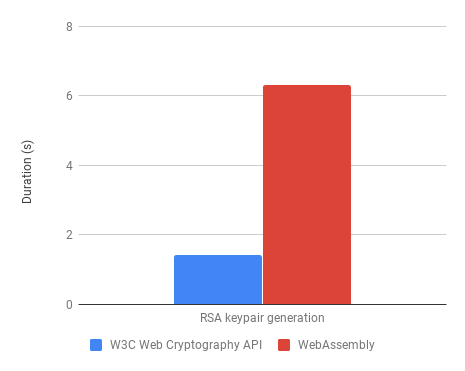
To import your public key to Amazon EC2, create an RSA key pair using a third-party platform. After this is done, you can import the key to Amazon EC2. Most of the programming languages like Python, Java, C#, C++ come with their standard libraries that enable RSA pair key generation.
EC2 only accepts keys with the following formats, OpenSSH public key format (the format in ~/.ssh/authorized_keys), SSH2 format, Base64 encoded DER format, and SSH public key file format as specified in RFC4716. It however does not support DSA Keys. The keys can have lengths between 1024, 2048, 4096, 2048 and 4096. The last two are for connected instance API.
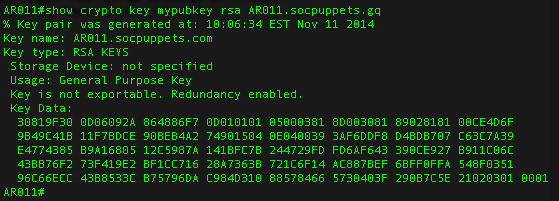
Create Your Key
To create the key, go to the console of your third party app and type in the following:
create-key-pair
–key-name <value>
[–dry-run –no-dry-run][–cli-input-json <value>][–generate-cli-skeleton <value>]
This will create a 2048-bit RSA key pair with the specified name. Remember to put in your desired name in the Key-name attribute.
C++ Generate Rsa Key Pair Key
Save Your Key
For the public key, you can choose any file extension you want and then save it to a local file. The file extension of the private key is, however, important. It is recommended that you save the private key to a file location different from the public key with a .pem extension
It is very important to save the private file in a location that you won’t mistakenly delete it or it can easily assessed by third parties. You will need this key anytime you want to connect to that instance or launch it. Your private key should look something like this
“ —–BEGIN RSA PRIVATE KEY—–
EXAMPLEKEYKCAQEAy7WZhaDsrA1W3mRlQtvhwyORRX8gnxgDAfRt/gx42kWXsT4rXE/b5CpSgie/
vBoU7jLxx92pNHoFnByP+Dc21eyyz6CvjTmWA0JwfWiW5/akH7iO5dSrvC7dQkW2duV5QuUdE0QW
Z/aNxMniGQE6XAgfwlnXVBwrerrQo+ZWQeqiUwwMkuEbLeJFLhMCvYURpUMSC1oehm449ilx9X1F
G50TCFeOzfl8dqqCP6GzbPaIjiU19xX/azOR9V+tpUOzEL+wmXnZt3/nHPQ5xvD2OJH67km6SuPW
oPzev/D8V+x4+bHthfSjR9Y7DvQFjfBVwHXigBdtZcU2/wei8D/HYwIDAQABAoIBAGZ1kaEvnrqu
/uler7vgIn5m7lN5LKw4hJLAIW6tUT/fzvtcHK0SkbQCQXuriHmQ2MQyJX/0kn2NfjLV/ufGxbL1
mb5qwMGUnEpJaZD6QSSs3kICLwWUYUiGfc0uiSbmJoap/GTLU0W5Mfcv36PaBUNy5p53V6G7hXb2
bahyWyJNfjLe4M86yd2YK3V2CmK+X/BOsShnJ36+hjrXPPWmV3N9zEmCdJjA+K15DYmhm/tJWSD9
81oGk9TopEp7CkIfatEATyyZiVqoRq6k64iuM9JkA3OzdXzMQexXVJ1TLZVEH0E7bhlY9d8O1ozR
oQs/FiZNAx2iijCWyv0lpjE73+kCgYEA9mZtyhkHkFDpwrSM1APaL8oNAbbjwEy7Z5Mqfql+lIp1
YkriL0DbLXlvRAH+yHPRit2hHOjtUNZh4Axv+cpg09qbUI3+43eEy24B7G/Uh+GTfbjsXsOxQx/x
p9otyVwc7hsQ5TA5PZb+mvkJ5OBEKzet9XcKwONBYELGhnEPe7cCgYEA06Vgov6YHleHui9kHuws
ayav0elc5zkxjF9nfHFJRry21R1trw2Vdpn+9g481URrpzWVOEihvm+xTtmaZlSp//lkq75XDwnU
WA8gkn6O3QE3fq2yN98BURsAKdJfJ5RL1HvGQvTe10HLYYXpJnEkHv+Unl2ajLivWUt5pbBrKbUC
gYBjbO+OZk0sCcpZ29sbzjYjpIddErySIyRX5gV2uNQwAjLdp9PfN295yQ+BxMBXiIycWVQiw0bH
oMo7yykABY7Ozd5wQewBQ4AdSlWSX4nGDtsiFxWiI5sKuAAeOCbTosy1s8w8fxoJ5Tz1sdoxNeGs
Arq6Wv/G16zQuAE9zK9vvwKBgF+09VI/1wJBirsDGz9whVWfFPrTkJNvJZzYt69qezxlsjgFKshy
WBhd4xHZtmCqpBPlAymEjr/TOlbxyARmXMnIOWIAnNXMGB4KGSyl1mzSVAoQ+fqR+cJ3d0dyPl1j
jjb0Ed/NY8frlNDxAVHE8BSkdsx2f6ELEyBKJSRr9snRAoGAMrTwYneXzvTskF/S5Fyu0iOegLDa
NWUH38v/nDCgEpIXD5Hn3qAEcju1IjmbwlvtW+nY2jVhv7UGd8MjwUTNGItdb6nsYqM2asrnF3qS
VRkAKKKYeGjkpUfVTrW0YFjXkfcrR/V+QFL5OndHAKJXjW7a4ejJLncTzmZSpYzwApc=
—–END RSA PRIVATE KEY—– ”
C Generate Rsa Key Pair Using Openssl
When the key pair is created, use new console, old console, AWS CLI or PowerShell to import the keys to Amazon AWS. Go to Amazon EC2 to access the Amazon EC2 console and import the just created keys. Just like with creating a key pair, choose key pairs but instead of creating a new key pair, select import key pairs.
Openssl Generate Rsa Public Private Key Pair C++
Once again, give it a name that you can easily associate with your instance. Here you can either browse through your files to select your file containing the key you can copy and paste the key contents into the Public key contents field. Also, make sure that the key pair you just imported appears in the list of key pairs. Now you have named, created, and saved your own AWS EC2 server key.